
Geopolitics of Phosphorus
The importance of trade, teleconnections and multi-level governance was one of the thematic panel sessions at the Sustainable Phosphorus Summit, a biannual event bringing together stakeholders from all parts of the world to discuss challenges and pathways for sustainable phosphorus management.
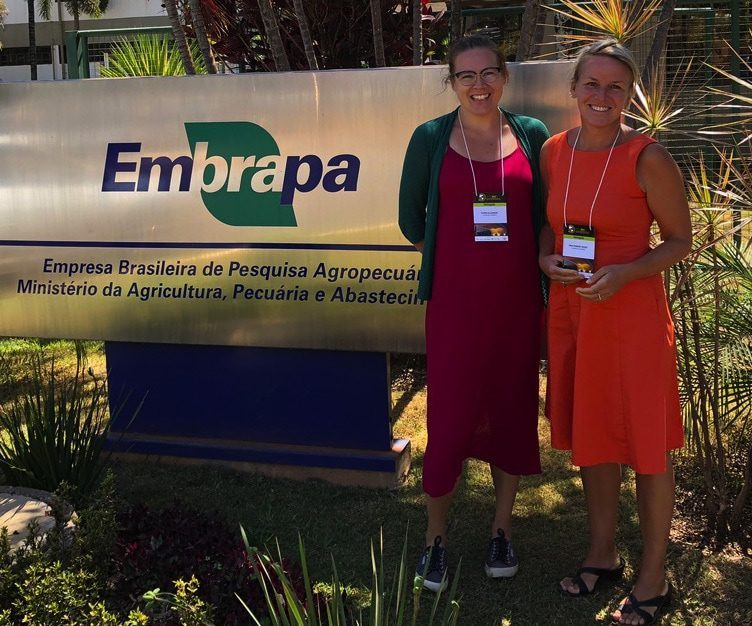
The 6th Sustainable Phosphorus Summit was held in Brasilia 20-23 august 2018, hosted by the Brazilian Agricultural Research Corporation – Embrapa. The biannual summit brings together researchers from a wide range of scientific fields as well as international organizations and industry to discuss latest research and policy development with a focus on sustainable phosphorus management.
Mistra Geopolitics researcher associate prof Tina-Simone Neset jointly with Dr. Genevieve Metson (both from Linköping University) chaired the thematic panel session ‘Geopolitics of Phosphorus – the importance of trade, teleconnections and governance for phosphorus sustainability’ , which brought together researchers from various countries and research areas focusing on teleconnections, trade, stakeholder mapping, institutional frameworks and governance aspects related to sustainable global phosphorus management.
The session took a specific focus on the risks and opportunities related to sustainable phosphorus management in a globalized world, which transcends individual households, farms, production systems or countries. As sustainable phosphorus management relates to several of the Sustainable Development Goals (SDGs), including zero hunger/food security, responsible consumption and production, and life on land, addressing these challenges requires thinking both locally and globally. Brazil is a prime example, where soy production destined for export means that drivers of management are international, but environmental impacts may be local.
Discussion themes ranged from producer and consumer roles in influencing important geopolitical implications of fertilizer consumption, to the importance of considering food trade when building a national food policy agenda, and the teleconnections between consumers and food producers. In addition, dependency on global phosphate rock reserves was also discussed, of which, according to the most recent estimates by the USGS, 84% are concentrated in five countries – with 71% in Morocco and Western Sahara alone.
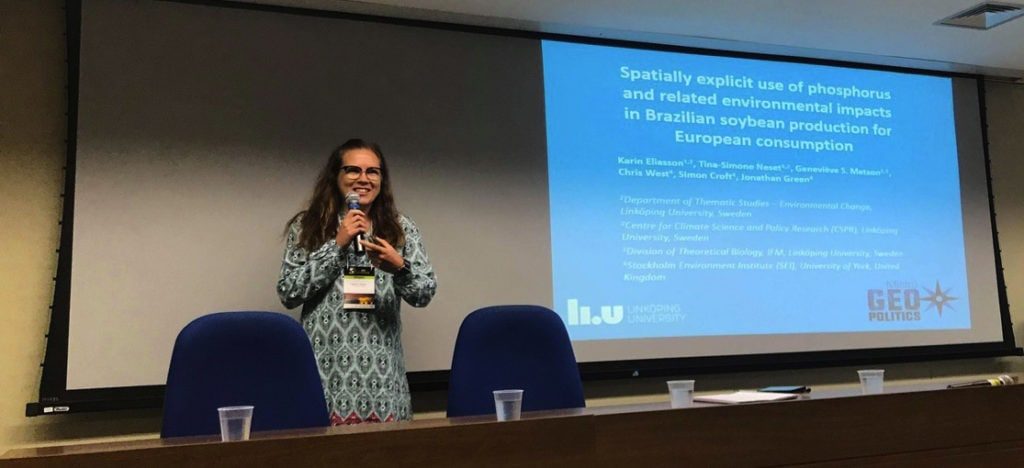
Mistra Geopolitics PhD student Karin Eliasson (Linköping University) presented her study ‘Spatially explicit use of phosphorus and related environmental impacts in Brazilian soybean production for European consumption’, which is a joint project with Mistra Geopolitics researchers from Linköping University and Stockholm Environment Institute.
The study takes off in the increasingly globalised agricultural trade system, where teleconnections become important in understanding the consequences of environmental and resource-use associated with food consumption in one country being displaced to producer countries. In addition to potentially displacing the nutrient related aquatic pollution associated with agriculture, a high share of food imports for a country might indicate increased vulnerability to changes in preconditions for agriculture in the country of production, such as access to mineral phosphorus fertilizers.
Soybeans have become an important part of industrial livestock production as a protein rich feed and understanding trade patterns between producer and consumer countries for soy is key to determining the changing impacts of food production on phosphorus security. Although phosphorus fertilizer application has decreased in Europe, imports of feed have increased. European countries import large amounts of soy from Brazil, the second largest producer of soybean in the world.
Due to the phosphorus retention soil properties in Brazil, production requires high rates of phosphorus fertilizer application; however, this soil property also contributes to less nutrient loss.
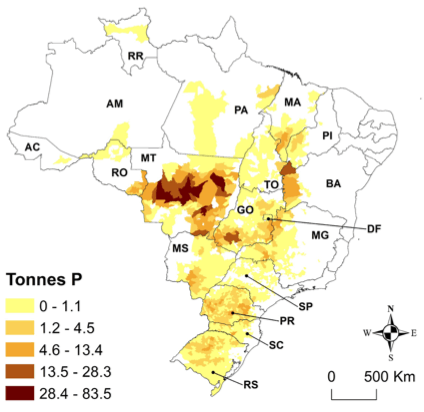
Although national patterns of trade and production have previously been highlighted, there is still a lack of high spatial resolution data on how specific consumption patterns in parts of Europe are connected to particular vulnerabilities and/or potential environmental consequences across specific Brazilian municipalities.
In light of this, the research team (including SEI researchers Dr. Chris West, Dr. Simon Croft and Dr. Jonathan Green) have explored how European soy consumption creates pressure on phosphorus resources and environmental impacts at the Brazilian municipal level. The results of this study contribute to making impacts of European consumption visible and inform research on European resource dependency. Initial results indicate significant differences in spatially explicit phosphorus use and potential environmental impacts caused by consumption in different European countries.
For more information visit: http://phosphorusfutures.net/ and http://www.sps2018.com.br/
Written by Karin Eliasson and Tina Neset.